If you want to master zayn malik hairstyle, this guide covers everything you need to know. Last updated: February 2026 | Written by Rohan Mehta, Indian & South Asian Grooming Editor
I remember the exact moment Zayn Malik changed the game for guys like me. It was 2013, I was 15, sitting in a barbershop in Houston with my phone out, trying to explain to my barber what I wanted. Every reference photo I had ever shown him before was some white guy with fine, straight hair. The cut never looked the same on me. Then I pulled up a photo of Zayn with that disconnected undercut and the thick, dark hair swept up on top. My barber looked at the photo, looked at my hair, and said: “Yeah. That’ll work on you.” It was the first time a celebrity hairstyle actually translated to thick South Asian hair without needing a translator.
That is what makes a Zayn Malik hairstyle guide different from another celebrity hair article. This is not just about copying a famous person’s cut. This is about the fact that Zayn Malik, a Pakistani-British man with thick, dark, coarse desi hair, has been a walking portfolio of what South Asian men can do with their hair for over fifteen years. He has worn a quiff, a buzz cut, bleached blonde, a man bun, curtain bangs, a textured crop, and about twenty variations in between. Every single one of those looks was done on hair with the same texture, density, and growth patterns that you and I deal with every morning.
This guide covers his complete hair evolution from 2010 to the present day. For each era, I am breaking down the exact cut, how to ask your barber for it, what products to use, and why it specifically works on thick South Asian hair. If you have been searching for Indian men hairstyles or Pakistani men hairstyles and wanting proof that these cuts look good on us, this is your resource.
Why Zayn Malik Matters for South Asian Grooming: Zayn Malik Hairstyle
Let me be direct about something. Before Zayn, the list of South Asian male style icons in Western media was painfully short. Bollywood stars were huge in India, but they did not cross over into the barbershop conversations happening in London, Toronto, New York, or Sydney. If you were a young desi guy in the West trying to figure out your look, you were essentially adapting European or African American grooming trends to hair that was not designed for them.
Zayn changed that equation. When he appeared on The X Factor in 2010 and then became part of One Direction, he was on magazine covers, red carpets, and music videos with hair that was unmistakably South Asian. Thick. Dark. High-density. And styled in a way that did not try to make it look like something it was not. He did not straighten it to death or hide it under a hat. He worked with the natural characteristics of desi hair and made it the focal point.
The cultural impact was measurable. Barbers in South Asian communities across the diaspora reported a surge in young men bringing in photos of Zayn’s cuts. The “Zayn Malik haircut” became one of the most searched grooming terms among South Asian men globally. For the first time, desi guys had a reference photo that actually looked like their own hair texture.
And then Zayn kept evolving. He did not settle into one signature look and stay there. He used his hair as a creative canvas, cycling through drastically different styles every few months. That experimentation gave South Asian men an expanding library of proof: yes, we can pull off a platinum buzz cut. Yes, thick desi hair works in a man bun. Yes, curtain bangs look good on brown skin with dark hair. The representation was not just about one haircut. It was about the range of what South Asian hair can do.
Zayn’s Complete Hair Evolution: 2010 to Now
I have organized this timeline by era, covering the major style shifts. Some of these overlapped, and Zayn often experimented with transitional looks between the big changes. I am focusing on the distinct, replicable styles that you can actually take to a barber.
The Quiff Era (2010-2012): One Direction Beginnings
When Zayn first appeared on The X Factor UK in 2010, his hair was relatively simple: a medium-length quiff with the front section pushed up and back, sides kept at a moderate length (about 1 to 2 inches), and very little product visible. It was messy, youthful, and intentionally imperfect. By 2011 and into 2012, the quiff grew taller and more defined. The sides got shorter while the top got longer, creating a proto-undercut silhouette that would become his calling card.
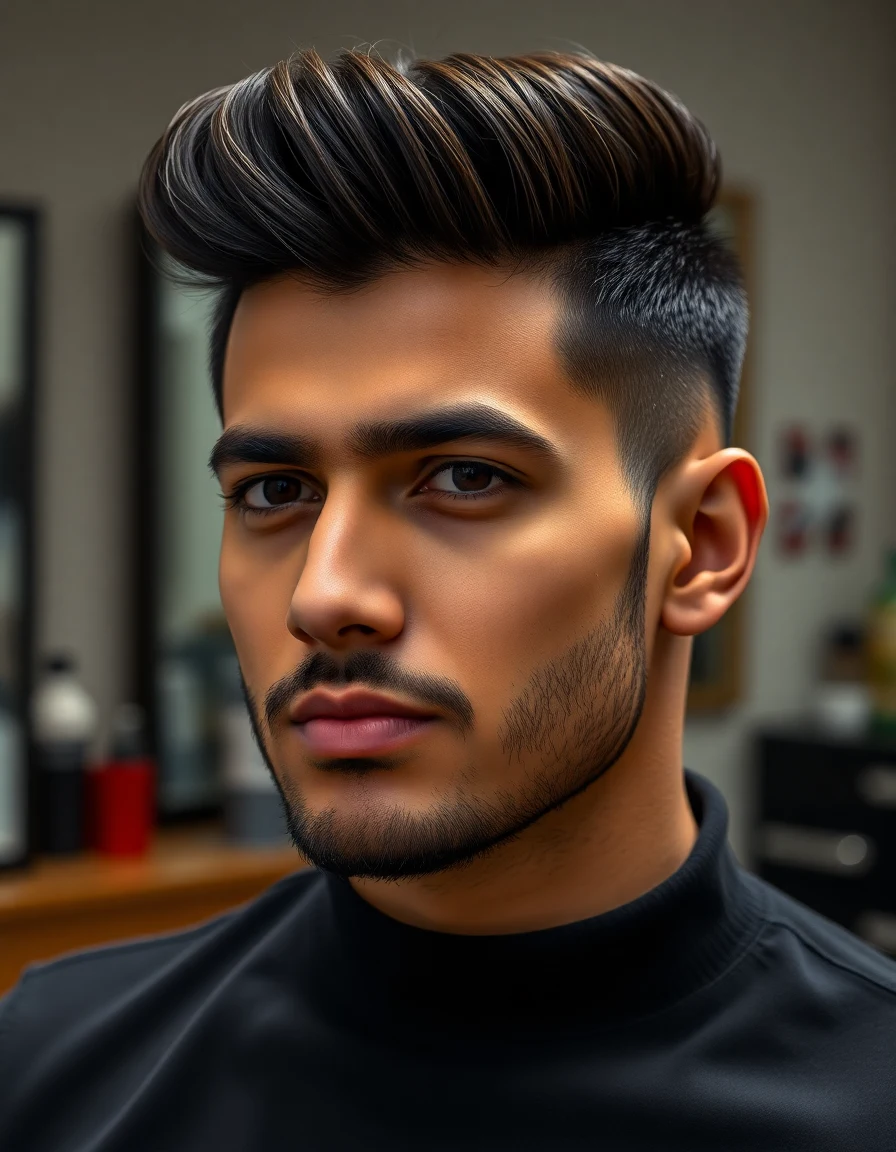
The specifics: 3 to 5 inches on top, graduating shorter toward the crown. Sides scissor-cut to about 1 inch, not buzzed. The front section was the focal point, pushed up with volume and slightly off-center. Very little product was used, giving the style a soft, touchable finish rather than a hard, gelled look.
Why it works on South Asian hair: Thick hair creates natural volume. Where a guy with fine hair needs a blow dryer and volumizing mousse to get height in the quiff, South Asian hair does it with its own density. The weight of the hair also helps the quiff hold its shape throughout the day without heavy product.
How to get it:
- Tell your barber: “4 inches on top, scissor-cut sides to about 1 inch, no hard part, natural texture on top”
- Style with a lightweight texturizing paste. Work a dime-sized amount through damp hair, push the front up and slightly to one side
- Blow dry on medium heat for 2 to 3 minutes, directing the front upward
- Skip the hairspray. The soft, unfixed look was the whole point of this era
The Disconnected Undercut (2013-2014): The Signature Look
This is the one. If you say “Zayn Malik hairstyle” to any barber in the world, this is the image that comes to mind. Starting in 2013 and peaking in 2014, Zayn sharpened the contrast between top and sides dramatically. The top section grew to 5 or 6 inches while the sides were buzzed to a #1 or #0, with no blending between the two. The result was a hard, architectural disconnect: long, styled hair on top sitting cleanly above closely shaved sides.
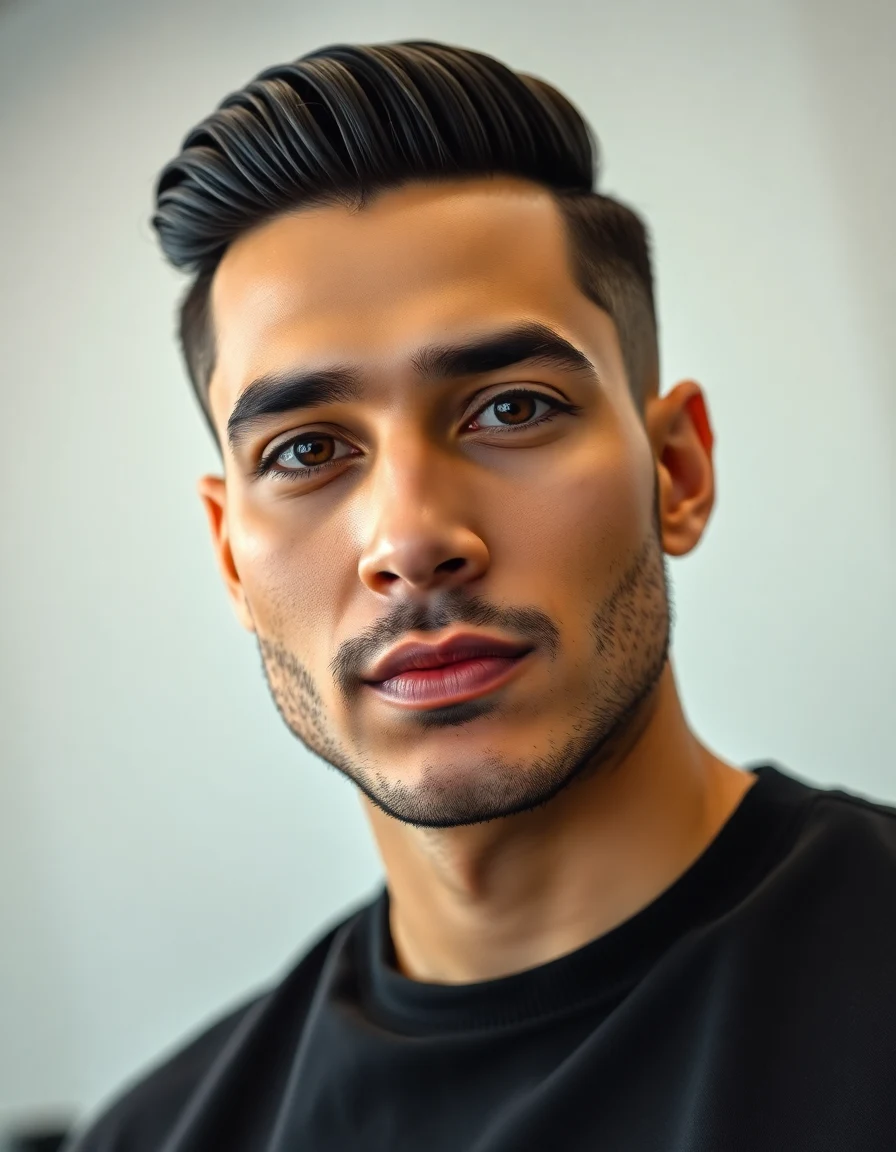
He styled the top in several variations during this period. Sometimes it was a full quiff, pushed straight up and back. Other times it was swept to one side with a deep side part. Occasionally he wore it pushed forward with textured strands falling over the forehead. The base cut stayed the same; the styling changed constantly.
The specifics: 5 to 6 inches on top. #0 to #1 clipper on sides and back. No blending or fading between top and sides; the disconnect is the point. Neckline squared off or tapered depending on the look. For styling, he alternated between matte clays for the textured quiff version and medium-shine pomades for the slicked-to-one-side version. Mastering zayn malik hairstyle takes practice but delivers great results.
Why it works on South Asian hair: The disconnect between thick, dark, voluminous hair on top and near-bare skin on the sides creates an incredibly dramatic contrast. Dark hair against brown skin on the buzzed sides is visually striking in a way that lighter hair against lighter skin simply cannot achieve. The density of desi hair also means the top section looks fuller and more substantial, which is the entire architectural intention of this cut. For more details on this silhouette, check out our undercut hairstyles guide.
How to get it:
- Tell your barber: “Disconnected undercut. #1 on sides with no blend into the top. Leave 5 to 6 inches on top. I want a hard line where the top meets the sides.”
- For the quiff version: blow dry the top straight up and back, apply matte clay (like Baxter of California Clay Pomade) from roots to tips, shape with your fingers
- For the slicked-side version: apply a medium-hold pomade (like Suavecito Firme Hold Pomade) to damp hair, comb to one side, blow dry in the direction you want it to lay
- Maintenance: sides need a touch-up every 2 to 3 weeks. The top can grow out for 4 to 6 weeks between trims
The Bleached Blonde Buzz (2015-2016): Post-One Direction Rebellion
When Zayn left One Direction in March 2015, his hair transformation was immediate and dramatic. He buzzed the sides even shorter, kept the top cropped close, and bleached everything platinum blonde. It was a visual declaration: new chapter, new identity. Over the following months, he experimented with various lengths and tones of blonde, from icy platinum to warmer golden shades, sometimes with dark roots growing in intentionally.
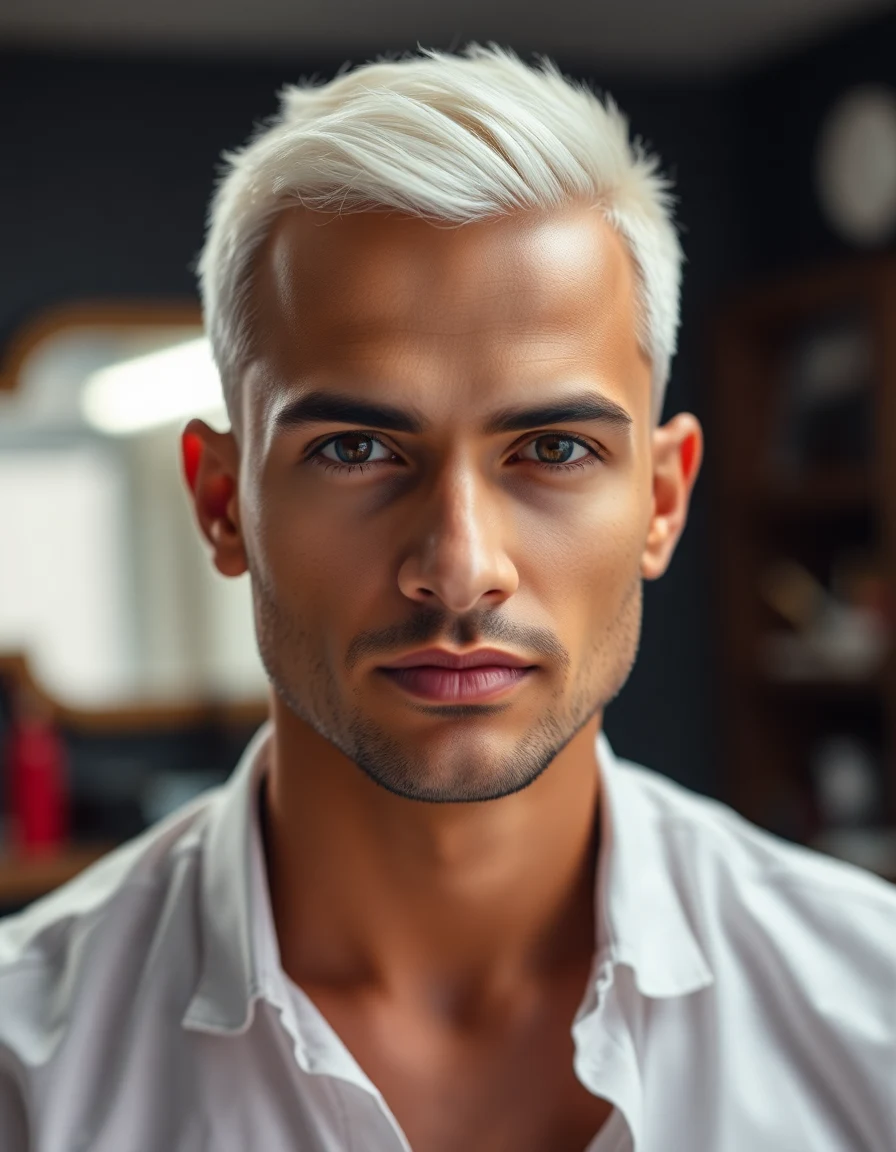
He also briefly shaved his head down to near-bald during this period, and at one point had a bright green tint over the blonde. The blonde phase coincided with the release of his debut solo album “Mind of Mine” in 2016, and the bold hair choices reflected the artistic independence of the music.
The specifics: Buzz cut ranging from a #2 to a #4 guard on top, sometimes with a skin fade on sides. Hair bleached from natural dark brown/black to platinum (level 10). During the grow-out phases, he would have 1 to 2 inches of bleached hair on top with darker roots visible.
Why it works on South Asian hair: Honestly, this is the hardest Zayn look to replicate on desi hair without risk. Going from level 1 or 2 (black) to level 10 (platinum) requires multiple bleaching sessions and can cause significant damage to the thick hair shaft. That said, when it works, it works. The contrast of platinum blonde against warm South Asian skin tones is genuinely striking. And because South Asian hair is so thick and coarse, even after bleaching it retains more body than fine hair would. If you want a less committed version, consider highlights or a balayage instead of full platinum. For more on buzz cut hairstyles, we have a dedicated breakdown.
How to get it:
- Go to a professional colorist, not a general barber. This is non-negotiable for dark South Asian hair
- Expect 2 to 4 bleaching sessions, spaced 4 to 6 weeks apart. Going platinum from black in one session will destroy your hair
- Use Olaplex No. 3 or a similar bond-repair treatment between sessions
- For the buzz cut base, ask your barber for a #3 all over with a skin fade on the sides
- Budget for purple shampoo to maintain the platinum tone and prevent brassiness
- Maintenance is high: dark roots show within 2 weeks on fast-growing South Asian hair. Touch-ups needed every 3 to 4 weeks
The Long Hair and Man Bun Phase (2017-2018): The Grow-Out
After the buzz cuts and the blonde, Zayn went in the complete opposite direction. He grew his natural dark hair out, letting it reach his shoulders and beyond. By 2017, he was regularly photographed with his hair tied back in a man bun, worn loose and wavy, or half-up with strands framing his face. This was during his relationship with Gigi Hadid, and the couple’s matching long-hair aesthetic became a fixture in fashion media.
The long hair revealed something about Zayn’s natural texture that the shorter styles had partially hidden: his hair has a natural wave pattern (approximately Type 2A to 2B) that becomes more pronounced at longer lengths. This is common in South Asian hair and gave his long style a different character than the poker-straight long hair popular among East Asian style icons.
The specifics: All-one-length growth, reaching 10 to 12 inches at the longest point. No undercut or fade on the sides. Natural dark color (he grew out the blonde entirely). Styled either loose with natural wave visible, in a full man bun at the crown/back, or in a half-up style with the top section pulled back and the lower layers loose.
Why it works on South Asian hair: South Asian hair’s thickness and density are enormous advantages for long styles. Where men with fine hair end up with limp, flat ponytails, thick desi hair creates man buns with actual substance and volume. The natural wave pattern that many South Asian men have (but never see because they keep their hair short) adds texture and movement at longer lengths. The dark color also means the hair catches light beautifully, with natural dimension that does not require any highlights or coloring.
How to get it:
- Patience. From a standard men’s cut, expect 18 to 24 months of growing to reach shoulder length
- Get a trim every 8 to 10 weeks during the grow-out. Ask your barber to “shape only, no length off the top, just clean up the outline.” This keeps the shape intentional while maintaining length
- The awkward phase (months 4 through 10) is real. Use headbands, clips, or a slicked-back style with pomade to manage the in-between lengths
- Invest in a good conditioner and lightweight hair oil (like Moroccan Oil Treatment) to manage the increased length without weighing it down. Check our South Asian men hair care routine for a complete long-hair protocol
- For the man bun, gather hair at the crown, twist once, and secure with a matte black elastic. Do not use rubber bands. They break hair
Curtain Bangs and Medium Length (2019-2021): The Refined Era
After the extremes of platinum blonde and shoulder-length locks, Zayn settled into a more moderate but highly polished aesthetic. His hair was cut to medium length (3 to 5 inches overall), often parted in the center or slightly off-center with curtain bangs that fell to either side of his forehead. The sides were kept longer than his undercut days but still shorter than the top, creating a soft taper rather than a hard disconnect.
This era also saw Zayn experiment with facial hair more seriously, pairing the medium-length hair with a well-maintained beard that ranged from heavy stubble to a short, shaped beard. The combination of curtain bangs and facial hair created a mature, fashion-forward look that moved away from the boyband aesthetic entirely.
The specifics: 4 to 5 inches on top and front, 2 to 3 inches on sides, graduated shorter toward the back. Center or off-center part, with the front sections trained to fall away from the face on both sides (the “curtain” effect). Natural texture encouraged rather than blown-out or heavily styled. Minimal product visible.
Why it works on South Asian hair: Curtain bangs are practically designed for thick, dark hair. The weight of each strand naturally pulls the bangs to the sides of the face, creating the curtain effect without much styling effort. Finer hair often needs constant training and product to hold the parted position. With South Asian hair, the density does the work. The dark color also frames the face beautifully against brown skin, creating a defined, photogenic silhouette. This is one of the most “set it and forget it” Zayn looks for desi hair. Understanding zayn malik hairstyle is key to a great grooming routine.
How to get it:
- Tell your barber: “Medium length on top, 4 to 5 inches, center part, curtain bangs to just past the eyebrows, sides 2 to 3 inches with a soft taper at the back.”
- Training the part: After washing, towel dry, part your hair in the center while it is still damp, and blow dry each side away from your face on low heat
- Product: Very little needed. A light texturizing spray (like Sea Salt Texturizing Spray) for some hold and texture, or a tiny amount of American Crew Fiber worked through the mid-lengths
- Maintenance: Trim every 4 to 5 weeks to keep the bangs from falling past the nose and the sides from getting bulky
The Textured Crop and Current Era (2022-Present): Mature Minimalism
In his most recent public appearances and social media posts, Zayn has gravitated toward shorter, cleaner styles. The textured crop has been his most consistent look in the 2020s: short on the sides with a taper fade, 2 to 3 inches of textured length on top, and a natural, undone finish. It is arguably his most wearable and accessible style. He has also been seen with variations including a slightly longer fringe pushed forward and a clean buzz cut.
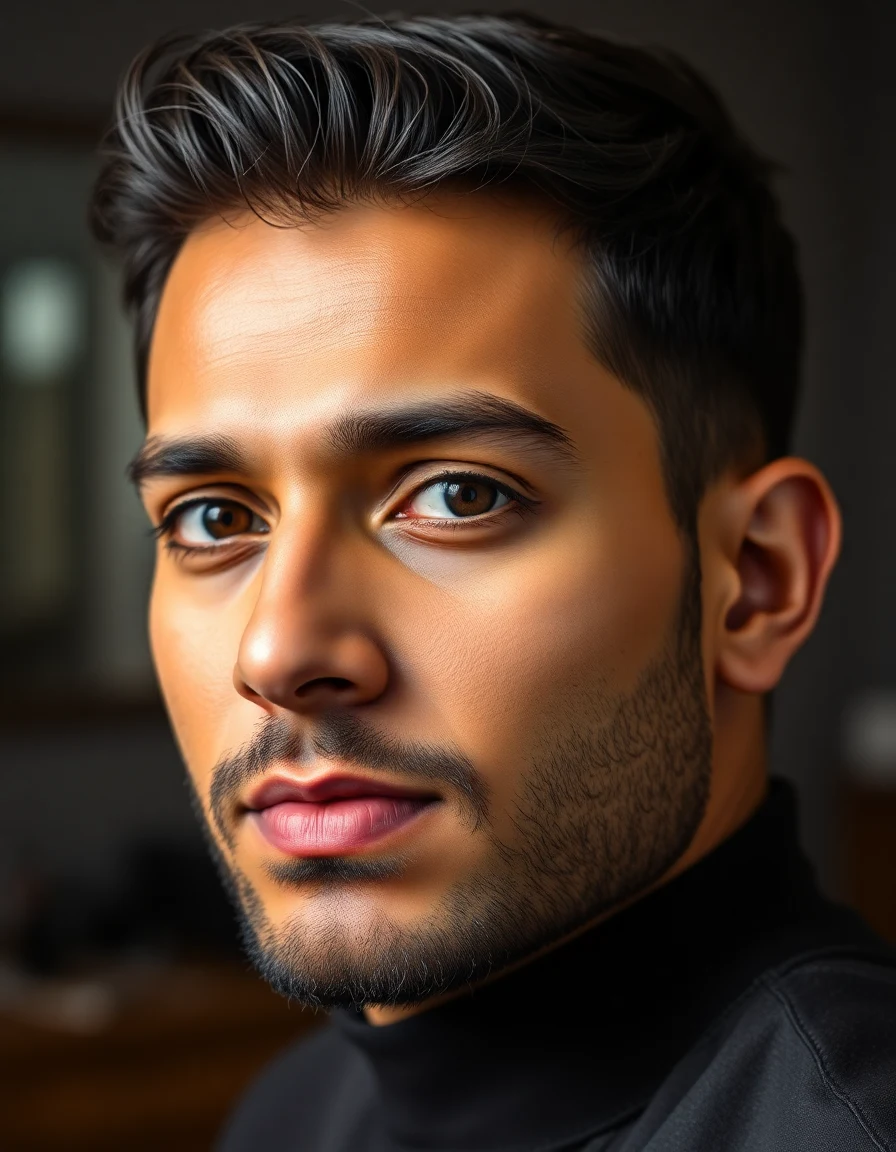
This era coincides with Zayn’s relative retreat from public life compared to his earlier years. The hair reflects that: understated, confident, not trying to make a statement. It is the hairstyle of a man who has already proven he can do anything with his hair and has settled into something that looks effortlessly good.
The specifics: 2 to 3 inches on top with natural texture. Taper fade on sides, typically a mid or low fade. No hard part. Fringe either textured and pushed forward or swept slightly to one side. Natural dark color. Styled with matte product for a dry, piece-y finish.
Why it works on South Asian hair: This might be the single best low-maintenance style for thick desi hair. The short length means the density is manageable. The taper fade provides clean structure on the sides. And the textured top takes advantage of the natural body in South Asian hair without requiring blow drying or heavy product. You can literally towel dry, work in a small amount of clay, mess it up with your fingers, and walk out the door in three minutes.
How to get it:
- Tell your barber: “Textured crop. 2 to 3 inches on top, mid taper fade on the sides, natural texture, no hard part.”
- Ask for texturizing or point-cutting on top to reduce bulk and create piece-y movement. This is critical for thick South Asian hair; without it, the top can look like a dense block
- Style with a matte clay like Hanz de Fuko Claymation or Layrite Cement Clay. Rub a pea-sized amount between palms, work through slightly damp hair, mess it up
- Maintenance: every 3 to 4 weeks for a touch-up. This is a relatively forgiving style that grows out well
How to Ask Your Barber for Each Look
Reference photos are your best friend. I cannot overstate this. Barbers are visual thinkers, and showing a photo eliminates 90% of miscommunication. But pairing a photo with the right vocabulary makes the result even more precise. Here is a quick reference table for each Zayn era, with the exact language to use. For a more comprehensive guide on barber communication, read our how to ask for a haircut breakdown.
| Era / Style | What to Say | Key Details to Specify |
|---|---|---|
| Early Quiff (2010-2012) | “Soft quiff, 4 inches on top, scissor-cut sides to 1 inch, no hard part” | Emphasize: no disconnect, gradual transition, natural finish |
| Disconnected Undercut (2013-2014) | “Disconnected undercut, #1 sides, 5 to 6 inches on top, no blend” | Emphasize: hard disconnect line, leave all length on top, squared neckline |
| Blonde Buzz (2015-2016) | “#3 buzz on top, skin fade on sides” (get color done separately by a colorist) | Emphasize: even length, clean skin fade, ask colorist for platinum lift |
| Long Hair / Man Bun (2017-2018) | “Shape only, maintain length, clean up the outline and remove split ends” | Emphasize: keep all length, light layers for movement, no thinning |
| Curtain Bangs (2019-2021) | “Center part, 4 to 5 inches on top, curtain bangs to the eyebrows, soft taper” | Emphasize: bangs trained to part, sides 2 to 3 inches, no hard disconnect |
| Textured Crop (2022-Present) | “Textured crop, 2 to 3 inches on top, mid taper fade, point-cut the top for texture” | Emphasize: piece-y texture, reduce bulk, natural fringe |
A note for South Asian men specifically: If your barber is not experienced with thick, high-density hair, make sure to mention that your hair is very dense and may need thinning shears or point-cutting on top to avoid a heavy, blocky look. The best barbers already know this, but stating it up front saves you from the “mushroom” effect where thick hair on top poofs outward instead of laying with direction and texture.
Best Products for Thick South Asian Hair
Every Zayn look requires a different product approach. Here is the breakdown by hold type and finish, with specific products I have tested on thick desi hair. For a complete product guide, see our best hair products for South Asian men roundup.
For the Quiff and Undercut (Medium to Strong Hold, Matte Finish)
The quiff and undercut looks need a product that provides lift and hold without shine. Thick South Asian hair holds a quiff well on its own, so you do not need the strongest hold available. What you need is a product that adds texture and keeps the hair from falling flat over the course of the day.
- Baxter of California Clay Pomade: My top pick for the Zayn quiff. Medium hold, completely matte, does not weigh down thick hair. Apply to damp hair and blow dry for best results.
- Hanz de Fuko Claymation: Stronger hold than the Baxter. Better for all-day hold if your hair tends to fall flat by the afternoon. Matte finish. Works in both damp and dry hair.
- Layrite Cement Clay: The heaviest hold on this list. Use this if you have especially thick, heavy hair that resists lighter products. A little goes a long way; start with half a fingertip amount.
For the Slicked-Back and Side-Swept Variations (Medium Hold, Low to Medium Shine)
When Zayn swept his undercut top to one side or slicked it back, the finish had a slight sheen. This comes from water-based pomades rather than matte clays.
- Suavecito Firme Hold Pomade: Strong hold, medium shine, water-soluble so it washes out easily. Apply to damp hair, comb into place, let air dry or blow dry on low.
For Curtain Bangs and Textured Styles (Light Hold, Natural Finish)
Zayn’s more recent styles are characterized by minimal visible product. The goal is hair that looks like you did nothing to it, even though you actually applied product for texture and control.
- Sea Salt Texturizing Spray: Spray into damp hair, scrunch, and let air dry. Adds grit and texture without weight. Perfect for curtain bangs and the textured crop.
- American Crew Fiber: Light hold with a matte finish. Excellent for the textured crop; work a small amount through damp hair and let it dry naturally.
For Long Hair and Growing Out (Conditioning and Lightweight Control)
Long South Asian hair needs moisture management more than hold. Without proper conditioning, thick desi hair gets dry, frizzy, and unmanageable at longer lengths.
- Moroccan Oil Treatment: A few drops worked through damp hair from mid-length to tips. Reduces frizz, adds shine, and keeps long, thick hair from looking straw-like. Do not apply to roots or you will get an oily scalp.
- A quality leave-in conditioner: Essential for the grow-out phase. Apply to wet hair after showering, comb through, and air dry.
Essential Tools
- A good blow dryer with a concentrator nozzle: Non-negotiable for the quiff and undercut styles. Direct heat and airflow exactly where you want volume.
- BaBylissPRO GoldFX Clippers: If you want to maintain your fade at home between barber visits. Professional-grade clippers handle thick South Asian hair without pulling or snagging.
- A wide-tooth comb: For detangling long hair. A fine-tooth comb will rip through thick, wet desi hair and cause breakage.
- Matte black hair elastics: For the man bun. Avoid rubber bands and metal clasps that break hair. Get the seamless, snag-free type.
Why These Styles Work for Desi Hair Texture
I want to dig deeper into why Zayn’s specific style choices translate so well to South Asian hair, because understanding the “why” helps you adapt these looks to your own head rather than just copying blindly.
Density as an Advantage, Not a Problem
Most mainstream grooming guides treat thick hair as something to manage or reduce. “Thin it out,” “take weight off,” “make it more manageable.” That framing misses the point. Zayn’s styles succeed because they use density as the central design feature. The quiff looks better with more hair. The undercut’s contrast is more dramatic with dense hair on top. The man bun has more presence with thick hair. Even the buzz cut looks sharper because the dense stubble creates a defined shadow across the scalp.
When choosing a Zayn style, lean into your density rather than fighting it. If your barber suggests thinning the entire top section, push back. Ask for point-cutting or texturizing instead, which removes weight selectively while preserving the overall density that makes these styles work. When it comes to zayn malik hairstyle, technique matters most.
Dark Hair Creates Natural Contrast
South Asian men typically have very dark hair (level 1 to 3 on the color scale) against warm, medium to olive-toned skin. This creates a built-in visual contrast that makes structured cuts pop. The clean lines of a fade or undercut are more visible when dark hair meets exposed skin. The silhouette of a quiff or pompadour reads as more defined against the sky or a light background. This natural contrast is something that lighter-haired men have to artificially create with color or product, but desi men get it for free.
Natural Wave Adds Character at Length
Many South Asian men have a slight natural wave (Type 1C to 2A) that only becomes apparent at 3 to 4 inches of length. This is an asset, not a flaw. Zayn’s curtain bangs and long-hair phases showed that this natural wave adds movement, dimension, and character that poker-straight hair does not have. If your hair has any natural wave, work with it. Do not straighten it flat. Use a lightweight product to enhance the wave rather than suppress it.
Fast Growth Means More Versatility
South Asian hair grows at roughly 6 inches per year, which is at the faster end of average. This means you can cycle through different Zayn looks more quickly than men with slower-growing hair. If a buzz cut is not working for you, you are back to crop length in 6 to 8 weeks. If a quiff is boring you, grow into curtain bangs in 3 to 4 months. Zayn’s willingness to change constantly is actually easier to replicate on desi hair than on most other textures.
Common Mistakes When Copying Zayn’s Hair
I have seen these repeatedly in barbershop waiting rooms, Reddit threads, and my own past attempts. Avoid them.
- Using too much product. Zayn’s styles always look natural and touchable, never shellacked or crunchy. If your quiff is not moving in the wind, you used too much. Start with half the amount you think you need.
- Skipping the blow dryer for the quiff. On thick South Asian hair, air drying a quiff often results in the hair falling to one side or forward instead of standing up. Three minutes with a blow dryer locks in the direction and volume. It is the difference between “styled” and “slept on.”
- Asking for a fade when you want a disconnect. A fade is a gradual blend from short to shorter. A disconnect is an abrupt transition with no blending. Zayn’s signature 2013-2014 look was a disconnect, not a fade. Mixing up the terms with your barber gets you a completely different result.
- Bleaching at home. South Asian hair going from black to blonde is a multi-session, professional-only process. Box bleach from a pharmacy will give you uneven orange patches, breakage, and regret. If you want to go blonde, budget for 3 to 4 salon visits.
- Ignoring the grow-out plan. If you want Zayn’s long hair, you need a strategy for the awkward middle phase. Going 6 months without any trims or shaping will not give you flowing locks; it will give you an amorphous blob. Get shaping trims every 8 to 10 weeks throughout the grow-out.
- Copying the style without considering your face shape. Zayn has an oval face, which suits almost everything. If you have a round face, avoid the curtain bangs (which add width) and opt for the quiff (which adds height). If you have a long face, skip the tall quiff and consider the textured crop, which does not add vertical length.
Zayn’s Influence on South Asian Grooming Culture
I want to close with why this matters beyond just haircuts. Zayn Malik grew up in Bradford, England, the son of a Pakistani father and an English mother of Pakistani descent. He entered the public eye at 17 and became one of the most visible South Asian men in global pop culture. His grooming choices, whether intentional or not, sent a message to millions of desi men: your hair texture is not a limitation. It is a material.
Before Zayn, the conversation around men’s hairstyles in South Asian communities was often conservative. Keep it neat. Keep it professional. Do not draw attention. Zayn showed that a desi man could have a platinum buzz cut and be on the cover of Vogue. He could grow his hair to his shoulders and sit front row at fashion week. He could shave designs into his undercut and still be taken seriously as an artist.
That cultural permission is his real legacy in the grooming space. Not any single haircut, but the demonstrated range of what is possible with South Asian hair. Whether you are a university student in Delhi, a finance professional in London, or a creative in Toronto, the library of Zayn Malik hairstyles gives you proof that thick, dark, desi hair can do anything. Now you have the specific instructions to make it happen.
For more South Asian grooming content, explore our guides on Asian hairstyles for men and the best hair products for South Asian men.
Frequently Asked Questions
What is Zayn Malik’s most iconic hairstyle?
Zayn Malik’s most iconic hairstyle is the textured quiff with a disconnected undercut that he wore during his transition from One Direction to his solo career (roughly 2014 to 2016). This look featured 4 to 6 inches of length on top, styled upward and back with visible texture, combined with shaved or closely buzzed sides. It became a defining look for South Asian men worldwide and proved that thick, dark desi hair could carry high-fashion editorial styles. The style works particularly well on South Asian hair because the natural density provides effortless volume and lift.
How do I get Zayn Malik’s quiff on thick South Asian hair?
Start with a disconnected undercut base. Ask your barber for 4 to 5 inches on top, a #1 or #0 on the sides, and no blending between the top and sides. To style, towel-dry your hair until it is about 80% dry, apply a small amount of matte clay or texturizing paste to your palms, and work it through the top section from roots to tips. Use a blow dryer on medium heat to push the front section upward and back. Finish with a light hairspray if needed. On thick South Asian hair, you may need less product than you expect because the natural body and density hold the shape well.
Can South Asian men pull off bleached blonde hair like Zayn?
Yes, but it requires caution and patience. Thick, dark South Asian hair (typically level 1 to 3 on the color scale) needs to be lightened through multiple bleaching sessions spaced 4 to 6 weeks apart to avoid severe damage. Never try to go from black to platinum in one sitting. A professional colorist experienced with dark hair is essential. Budget for ongoing maintenance because dark roots grow in fast and the contrast is very visible. Consider a less extreme option first, like dark brown with blonde highlights or a balayage, which requires less upkeep and causes less damage.
What hair products does Zayn Malik use?
While Zayn has not publicly endorsed a specific product lineup, stylists who have worked with him have mentioned using matte clays and texturizing pastes for his signature looks. For South Asian men trying to recreate his styles, a matte clay (like Baxter of California Clay Pomade or Hanz de Fuko Claymation) works best for the textured quiff and crop styles. A medium-hold pomade works for the slicked-back undercut. Sea salt spray is useful for adding texture to longer styles.
How long does it take to grow hair like Zayn Malik’s long hair phase?
South Asian hair grows at an average rate of about 6 inches per year. To go from a standard short men’s cut (1 to 2 inches on top) to Zayn’s shoulder-length look (approximately 10 to 12 inches), expect a growth period of 18 to 24 months. The awkward middle phase (typically months 4 through 10) is the hardest part. Use headbands, clips, or slicked-back styling to manage the in-between lengths. Regular trims every 8 to 10 weeks to shape the growing hair and remove split ends will make the process smoother, even though it seems counterintuitive to cut hair you are trying to grow.
How often should I get my hair cut to maintain a Zayn Malik style?
It depends on the specific look. The disconnected undercut needs maintenance every 2 to 3 weeks because the shaved sides grow out fast and lose their clean contrast. The textured quiff needs a trim every 3 to 4 weeks to maintain shape. The buzz cut needs a touch-up every 1 to 2 weeks. Longer styles like the curtain bangs or man bun need shaping every 6 to 8 weeks. South Asian hair grows fast and thick, so you will generally be at the more frequent end of these ranges compared to men with finer hair.
What face shape suits Zayn Malik’s hairstyles?
Zayn has an oval face shape, which is considered the most versatile for hairstyles. However, his specific looks work across face shapes with minor adjustments. The quiff adds height and suits round and square faces well. The undercut elongates the face, which benefits rounder face shapes. The buzz cut works best on oval and diamond shapes. Curtain bangs soften angular features and suit square and rectangular faces. The key is adapting the proportions: if you have a round face, add more height on top and keep the sides tight; if you have a long face, avoid too much height and keep some width at the sides.
Further reading: For research-backed grooming advice, see Healthline Men’s Health.
Frequently Asked Questions
What is Zayn Malik’s most iconic hairstyle?
Zayn Malik’s most iconic hairstyle is the textured quiff with a disconnected undercut that he popularized during his transition from One Direction to his solo career around 2014. This look features longer hair on top with significant volume and texture, paired with a sharp fade or undercut on the sides, creating a bold contrast that works well for men with straight to wavy hair types.
How can I ask my barber for a Zayn Malik-style haircut?
When visiting your barber, ask for a textured quiff with a disconnected undercut or taper fade on the sides. Show your barber reference photos of Zayn’s iconic look and specify the length you want on top (typically 2-3 inches) and how high you want the fade. This approach helps ensure you and your barber are on the same page about the style.
What products do I need to style a Zayn Malik quiff?
For a textured quiff like Zayn’s, you’ll need a clay pomade or fiber product such as Hanz de Fuko Claymation or American Crew Fiber for hold and texture. Apply the product to damp hair and style upward and back, using a sea salt texturizing spray if you want extra grip and a more lived-in appearance.
Does the Zayn Malik hairstyle work for all hair types?
The Zayn Malik quiff works best on straight to wavy hair types, though you can adapt it for curly hair by working with your natural texture and asking your barber for a similar undercut structure. Men of all ethnic backgrounds can pull off this look, but you may need to adjust the product choice based on your hair’s specific needs and texture.