“Italian beard” is not one style. It is a set of principles that happens to produce about a dozen recognisable looks, and the principles matter more than the list, because once you understand them you can ask a barber for any of the looks and actually get it.
The principles are clean lines, deliberate proportion, and symmetry. An Italian beard is never accidental. It is not the beard you get by not shaving; it is a beard whose edges somebody decided on. That is the whole difference, and it is why two men with identical growth can look like they belong in different decades.
This guide covers what makes a beard read as Italian, the twelve styles the term actually refers to, how to choose between them, and how to get and keep one. If you are after the broader picture of beard styles by hair type, our beard styles guide for coarse, dense hair covers the technical side in more detail.
What makes a beard “Italian”
Four things, and none of them is length.
Defined edges
The cheek line is drawn, not left to grow where it wants. The neckline sits at a deliberate height. The moustache is shaped rather than merely present. Italian beard styles are edge-led: the length is whatever supports the shape, and the shape is the point.
This is also why the style photographs so well and why it is popular in professional settings. A defined edge reads as intent. An undefined one reads as neglect, even on identical growth.
Proportion to the face, not to fashion
The Italian approach sizes the beard to the face rather than to whatever length is current. A long face gets a beard with width and a flat bottom line. A round face gets angles and length at the chin. The beard is a corrective instrument, and that is a very different mindset from growing as much as you can and tidying the result.
Symmetry taken seriously
Both cheek lines at the same height. Both sides of the moustache the same length. The chin centred. Most men never check, and asymmetry is the single most common reason a well-grown beard looks slightly wrong without anyone being able to say why.
Groomed, not product-heavy
The finish is conditioned and matte rather than waxed and shining. Oil to keep the hair and the skin underneath in condition, balm for shape if the beard is long enough to need it, and nothing that makes the beard look wet. The Italian look is well-kept, not styled into place.
The twelve Italian beard styles
1. The Italian short boxed beard
The signature, and the one most people picture. A full beard kept short and even across the chin, jawline and moustache, with the cheeks squared off along a hard line and the bottom edge cut into a clean horizontal rather than allowed to taper into a point.
It is rectangular by design. The squared bottom edge is what separates it from an ordinary short beard, and it is why the style holds a jawline so well: it draws a straight line where your jaw is, whether or not your jaw does.
Length sits around a 3 to 6 on a trimmer guard. It suits nearly every face shape, it is office-appropriate anywhere, and it is the most forgiving of the twelve if your growth is less than perfectly even.
2. The Balbo
Named after Italo Balbo, the Italian aviator who wore it. A moustache disconnected from a chin beard, with the cheeks and jawline shaved clean and no sideburn connection at all. The chin section is usually a shaped patch running under the lower lip and across the chin, sometimes with a narrow strip down each side.
The Balbo is the answer for men whose cheek growth is sparse but whose chin and moustache come in strong, because it removes the cheeks from the equation entirely rather than trying to disguise them. It requires real precision: the gap between moustache and chin beard has to be deliberate and even, and it is obvious when it is not.
3. The Garibaldi
Named after Giuseppe Garibaldi. The opposite end of the range: a full, wide, rounded beard, worn long, with the bottom left rounded rather than squared and the moustache grown out to blend into it.
It is the one Italian style that is deliberately not sharp at the bottom, and it needs genuine density to work. On patchy growth it reads as unkempt rather than as generous. On full growth it is the most striking of the twelve. Expect four to six months of growth and a real conditioning routine; see our guide to how often to wash a beard for the maintenance, which matters more at this length than at any other.
4. Designer stubble
Deliberately short, evenly clipped, and edged as carefully as a full beard. This is where most men get it wrong: stubble is not two days of not shaving, it is a length setting plus a cheek line plus a neckline.
Around 3mm is the sweet spot. Shorter reads as unshaven, longer starts asking to be shaped as a proper beard. It is the lowest-commitment Italian style and the highest-frequency one, because it needs attention every two or three days to stay at its length.
5. The circle beard
A moustache joined to a rounded chin beard, forming a closed circle around the mouth, with cheeks and jaw clean. Sometimes called a door knocker.
It is the softest of the Italian looks and the most flattering on round and oval faces, because the circle adds a vertical emphasis that a full beard on a round face does not. It also works well on moderate growth, since it needs density only in the areas most men have it.
6. The faded beard lineup
A full beard with the sides faded into the hairline rather than stopped at a hard cheek line, so the transition from haircut to beard is continuous. The neckline stays crisp.
This is the most contemporary of the twelve and the one that most depends on the barber rather than on you. The fade has to match the fade in your haircut, which means booking both together rather than doing the beard yourself between cuts.
7. The chin curtain
Beard along the jawline and chin with the moustache removed or kept minimal. Older than it sounds and periodically back in fashion.
It is unforgiving of a weak jaw, because it draws a line exactly along the jaw and invites the eye to follow it. On a strong jaw it is excellent, and it is one of the few styles that works well with a shaved head.
8. The short full beard with a hard cheek line
The workhorse. Full coverage, short length, no fade, one clean straight line across each cheek. Not as architectural as the boxed beard because the bottom is left natural, but far sharper than a beard left to its own edges.
If you want one style that needs the least thought and still looks deliberate, this is the one.
9. The Van Dyke
A disconnected moustache and a pointed chin beard, no cheeks and no jawline. Worth saying plainly: this one is Flemish rather than Italian, named after the painter Anthony van Dyck, and it is included here because it sits in the same family of shaped, disconnected styles and gets grouped with them constantly.
It is the most formal of the disconnected looks and the most demanding to maintain, since the point at the chin has to be trimmed to stay a point.
10. The heavy moustache with light stubble
Italian grooming has a long moustache tradition, and this is the modern expression of it: a genuinely substantial moustache with the rest of the face kept at short stubble, so the moustache is clearly the feature rather than part of a beard.
It needs a moustache that can carry the attention. Our guide to moustache styles covers the shapes in detail.
11. The corporate short beard
Everything shorter than the boxed beard, edges just as clean, neckline slightly higher than you would set it otherwise. Built for environments where a beard is acceptable but must not be the first thing anyone notices.
The higher neckline is the trick. It reads as more deliberate at a glance and it survives a longer gap between trims without looking scruffy.
12. The extended goatee
A goatee widened to include a strip along the jaw, connected to the moustache but with the upper cheeks clean. A middle point between the circle beard and the full beard, and a genuinely useful option when cheek growth starts strong at the jaw and thins higher up.
Our guide to goatee versus full beard covers when each is the better call.
The twelve at a glance
| Style | Growth needed | Upkeep | Best for | Main failure mode |
|---|---|---|---|---|
| Short boxed beard | 4-6 weeks | Every 3-5 days | Long and square faces; almost anyone | Bottom edge left to taper instead of squared |
| Balbo | 4-6 weeks | Every 2-3 days | Sparse cheeks, strong chin | Uneven gap between moustache and chin |
| Garibaldi | 4-6 months | Weekly, plus daily conditioning | Dense, full growth | Attempted on growth that cannot fill it |
| Designer stubble | 3-5 days | Every 2-3 days | Any face; low commitment | Treated as not shaving rather than as a length |
| Circle beard | 3-4 weeks | Every 3-4 days | Round and oval faces | Circle drawn too small and tight |
| Faded lineup | 4-6 weeks | With every haircut | Anyone with a faded haircut | Fade attempted at home between cuts |
| Chin curtain | 4-6 weeks | Every 3-5 days | Strong jaw; shaved heads | Worn over a weak jaw it emphasises |
| Short full beard | 4-6 weeks | Weekly | The default; lowest effort | Cheek line never actually drawn |
| Van Dyke | 4-6 weeks | Every 2-3 days | Formal settings; strong chin | Chin point allowed to go blunt |
| Heavy moustache, light stubble | 6-8 weeks for the moustache | Every 3-4 days | Men who can grow a real moustache | Moustache too small to carry the look |
| Corporate short | 3-4 weeks | Weekly | Conservative workplaces | Neckline set too low for the length |
| Extended goatee | 4-5 weeks | Every 3-5 days | Jaw growth strong, upper cheeks thin | Jaw strip drawn at inconsistent widths |
Choosing by face shape
The Italian principle is proportion, so this is the part that decides which of the twelve is yours.
Round face
You want length at the chin and nothing at the sides. The circle beard, the extended goatee, the Balbo and the Van Dyke all add vertical line. Avoid the boxed beard and anything wide, which will widen a face that is already wide.
Long or rectangular face
The opposite. You want width and a flat bottom edge, which is exactly what the short boxed beard provides. Designer stubble also works. Avoid the Garibaldi and anything that adds length below the chin.
Square face
Almost everything works, which is an enviable problem. The short full beard and the boxed beard both play to a strong jaw. If you want to soften rather than emphasise, the circle beard is the one.
Oval face
Also unusually flexible. Choose on lifestyle and growth rather than on geometry.
Heart-shaped face
Weight at the chin balances a wider forehead, so the full beard, the Garibaldi and the extended goatee all help. Keep the cheeks from going too high.
Our guide to beard styles for a round face goes into the geometry further.
The tools that actually matter
You need four things, and two of them are not what most lists put first.
A trimmer with real guard increments
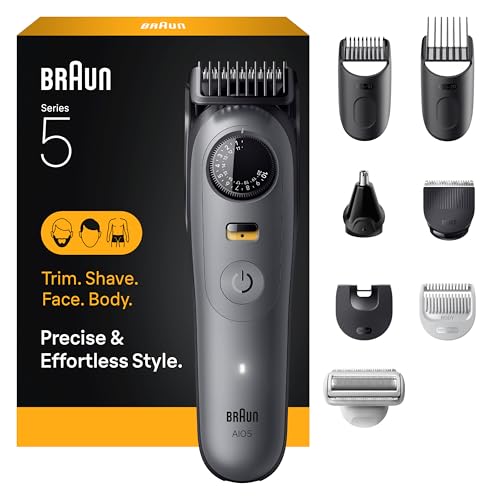
The critical specification is not motor power, it is how finely the guards step. A trimmer that jumps from 3mm to 6mm gives you two choices in the range where every Italian style lives. One that steps in 0.5mm or 1mm increments lets you actually find your length, and then return to it. Adjustable-comb models are usually better value than a box of fixed guards for this reason.

A detail trimmer or a straight razor for the lines
The cheek line and neckline are edges, and a guarded trimmer cannot cut an edge. This is the tool most men are missing, and it is why their lines look approximate. A bare trimmer blade works; a foil shaver or a safety razor gives a cleaner finish against the skin.
Two mirrors
Unglamorous and genuinely decisive. You cannot set a symmetrical neckline by feel, and you cannot check the underside of your own jaw in a single flat mirror. A hand mirror held against a bathroom mirror costs nothing and eliminates the most common source of asymmetry.
Beard oil, and nothing else at first
Oil does the work. Balm, wax, butter and beard-specific shampoos all have their place at longer lengths, but a short Italian beard needs conditioning and that is all. Buy one good oil before buying a kit.

A realistic week-by-week timeline
Knowing what each stage looks like is most of what gets people through it.
Week 1. Stubble. Nothing to do except keep the neck clean. Resist shaping: there is nothing to shape yet and any line you draw now will be in the wrong place by week three.
Week 2. The itch, and the stage at which most attempts end. It is cut hair ends against the skin, not a problem with the beard. Wash properly, start oiling once there is enough length for the oil to reach the skin, and wait it out. It passes.
Week 3. The awkward stage proper. Uneven, scruffy, no shape. This is also when patchiness looks worst and permanent. It is neither.
Week 4. Density starts filling the gaps as neighbouring hairs lengthen and lie over them. The beard begins to read as intentional. First real shaping decision becomes possible for the shorter styles.
Weeks 5 to 6. Enough length and coverage to shape any of the short styles properly. This is where to book a barber for the first proper lineup, even if you plan to maintain it yourself afterwards, because the first set of lines is the hardest to get right and everything after is maintenance of them.
Beyond week 8. Only relevant if you are growing a Garibaldi or a long full beard. From here the work shifts from growing to conditioning, and washing and oiling stop being optional.
Growing it: the part nobody enjoys
Most Italian styles need four to six weeks of uninterrupted growth before there is enough to shape. Shorter than that and a barber is working with too little to draw a line into.
Do not trim during those weeks. The urge to tidy at week two is what keeps most men permanently at week two. The only exception is the neck: keep the neck clean throughout, because neck growth is what makes a growing-out beard look unkempt rather than in progress, and removing it costs you nothing you were going to keep.
Expect the itch around week two and expect it to pass. It is the cut ends of the hair against the skin rather than anything wrong; washing properly and using an oil once the growth is long enough will shorten it considerably.
Patchiness at week three is not patchiness at week six. Coarse hair fills in slowly and unevenly, and a gap that looks permanent at three weeks is frequently covered by neighbouring growth by six. Judge it at the end. If it is still genuinely patchy, our guide to fixing a patchy beard covers what helps and what does not, and the Balbo and circle beard both exist precisely for that situation.
Shaping: the three lines that decide everything
The cheek line
The single highest-impact decision. Too high and the beard looks painted on; too low and you lose the fullness you spent six weeks growing.
The standard guide is a line running from the corner of the sideburn to the corner of the moustache. Follow your natural growth line and clean above it rather than inventing a line somewhere else, then keep it consistent on both sides. A soft, slightly natural cheek line ages better than a razor-straight one, but it still has to be a line.
The neckline
Set it roughly one finger-width above the Adam’s apple, curving up to meet a point behind the jaw on each side. Not along the jawbone, which is the most common mistake and produces the floating-beard effect, and not left to grow down the throat.
The test: tilt your head down and look in the mirror. If the beard disappears into your neck, the neckline is too low. If your jaw looks bare underneath, it is too high.
The moustache connection
Decide whether the moustache connects to the beard or not, and then commit. A moustache that half-connects is the least deliberate thing on the face. If the growth between moustache and chin is thin, either shave it clean for a Balbo or grow it out and let it fill.
Maintenance
Italian styles are line-dependent, and lines blur fast.
Every three to five days: cheek line, neckline, moustache edge. This is a five-minute job with a trimmer and it is the difference between the style and an approximation of it.
Every two to three weeks: overall length. Take less than you think. It is the trim that gets rushed.
Wash two or three times a week with something intended for facial hair rather than the bar soap in the shower, which strips the beard and leaves the skin underneath tight and itchy. Daily washing is usually too much.
Oil on damp skin after washing, worked to the skin rather than only through the hair. The condition of the skin under the beard decides whether the beard itches, flakes and looks healthy, and it is what most routines skip. Our roundup of beard oils covers scent and formulation.
Balm only if the beard is long enough to need holding. On a short boxed beard it is unnecessary and it makes the finish heavier than the style wants.
Comb or brush daily once the beard is past stubble, and do it before trimming rather than after. Combing lifts the hairs to their true length and reveals where the beard is actually uneven, which is information you want before the trimmer is running rather than after. A boar-bristle brush also distributes the oil from the skin outward, which is half of what oiling is for.
The one thing worth putting in the calendar rather than doing by feel: a barber lineup every four to six weeks even if you maintain the beard yourself in between. Home maintenance holds a shape; it does not reset one. Lines drift by a millimetre each time you touch them, always in the same direction, and after two months of self-trimming the cheek line is measurably higher than where you started without a single trim having looked wrong.
The skin underneath
Most beard complaints are skin complaints wearing a beard costume, and treating them as hair problems is why they persist.
Flaking
Almost never the beard. It is dry skin or seborrheic dermatitis on the face, and oiling the hair without getting oil to the skin does nothing for it. Work the oil in with your fingertips against the skin rather than combing it through the hair. If flaking persists with a proper routine, treat it as a scalp condition on the face, because that is usually what it is.
Ingrown hairs along the neckline
Coarse facial hair curling back into the skin after being cut close. The neckline is the worst spot because it gets shaved most often and the skin there is thin.
What helps: shave the neck with the grain rather than against it, use a single-blade or safety razor rather than a multi-blade cartridge, and stop chasing perfect smoothness. What does not help: shaving more often to clear the bumps, which is the instinct and makes it worse.
Irritation from the trimmer
Usually a blunt blade or a dirty one. Blades dull invisibly, and a dull blade pulls the hair before cutting it. Clean after every use and replace on the manufacturer’s schedule rather than when it stops working, because by then you have been irritating your face for weeks.
Acne under the beard
Generally product build-up plus insufficient washing rather than the beard itself. Heavy balms and waxes on skin that is not washed properly clog the follicles. Lighten the product before you blame the hair.
Matching the beard to your haircut
An Italian beard is a proportion exercise, and the haircut is half of the proportion.
A short beard with long hair on top reads as deliberate and modern. A long beard with very short hair reads as deliberate and traditional. A long beard with long hair is a specific choice and needs commitment to both. The combination that rarely works is medium everything, which reads as unattended rather than as chosen.
If your haircut is faded, the beard should be faded or clearly hard-lined; a soft undefined beard edge under a sharp fade looks like two different decisions. If your haircut has a hard part or a strong line, the beard’s cheek line should be similarly hard.
The weight rule is simple: volume at the top of the head pairs with a shorter beard, and a very short cut pairs with more beard. Both at once makes the head read as top-and-bottom heavy with nothing in the middle.
Grey in the beard
Grey arrives in the beard earlier than on the head for a lot of men, and it frequently arrives asymmetrically, in a patch at the chin or along one side.
The Italian approach is to lean into it rather than to hide it, because a well-edged grey beard reads as distinguished while a badly dyed one reads as neither. If you do want to reduce the contrast, a colour one shade lighter than your natural tone looks more plausible than an exact match, which tends to come out flat and obvious against the skin.
Grey hair is also coarser and more wiry than pigmented hair, so it takes conditioning differently. It will need more oil than the rest of the beard and it will hold a shape less willingly. Our guide to grey beard styles covers the styling and the colour question in more depth.
Talking to your barber
Ask for the style by name, then describe the three lines, because the name alone means different things in different shops.
Say where you want the cheek line: “follow my natural line, clean above it” or “take it down a touch, I want it lower than last time”.
Say where you want the neckline: “one finger above the Adam’s apple” is unambiguous and prevents the jawline mistake.
Say the length in guard numbers rather than in words. “Short” is not a measurement.
Say whether you want the bottom squared or left natural. This is the single instruction that separates a boxed beard from a short full beard, and it is the one most often omitted.
Book the beard with the haircut if you want a faded lineup. It cannot be matched afterwards.
Common mistakes
Setting the neckline along the jaw. It makes the beard look stuck on and it removes the jaw definition the beard was supposed to provide.
Trimming during the growing phase. Six weeks of patience beats six weeks of adjustment.
Shaping when wet. Facial hair is longer wet than dry, so shaping wet means cutting shorter than intended, exactly as it does on the head.
Ignoring the skin. Flaking under a beard is almost always the skin rather than the hair, and no amount of beard oil on the hair alone will fix it.
Asymmetry. Check both cheek lines in the mirror at the same height, every single trim.
Too much product. The Italian finish is matte and conditioned. Shine reads as greasy.
Recovering from a bad trim
Everyone eventually takes too much off one side and then chases it. Here is how to stop chasing.
You cut one cheek line too high. Do not lower the other to match, which is the instinct and which leaves you with two lines that are both too high. Leave both alone for ten days; the higher side grows back into range and you re-draw both from the natural line. A hard cheek line grows back faster than you expect precisely because it was cut against the grain of the growth.
You took the neckline too high. Nothing to do but wait, and it is the most visible mistake for the longest, roughly two to three weeks. In the meantime keep the rest of the beard shorter than usual so the proportions do not draw attention downward.
You cut a notch in the beard. Resist evening it out. Taking the whole beard down to the depth of the notch costs you every week of growth; leaving it costs you about ten days of a small gap that nobody but you will see.
You disconnected the moustache by accident. Commit to it for two weeks and wear it as a Balbo. It is a real style, it looks deliberate, and by the time you are bored of it the connection has grown back.
Matching the style to the setting
The same beard reads differently in different rooms, and the Italian principle of proportion extends to context.
Conservative professional. Corporate short or the short boxed beard, neckline set slightly higher than you otherwise would, length at the shorter end. Nothing disconnected; a Balbo or Van Dyke reads as a statement in rooms where you may not want to be making one.
Creative or client-facing. The boxed beard and the faded lineup both work hard here, because the sharpness itself communicates care. This is where the Italian approach genuinely outperforms a longer, softer beard.
Formal events. Shorter and sharper, trimmed two days before rather than the morning of, so any irritation has settled and the lines have lost their very freshest edge. A beard trimmed the same morning photographs slightly harsh.
Manual or safety-critical work. If you wear a respirator, facial hair in the seal area defeats it, which rules out most full styles. The Balbo, the Van Dyke and a moustache-only look all keep the seal area clear, and that is a genuine reason those styles persist rather than a matter of taste.
Frequently Asked Questions
What exactly is an Italian beard?
An umbrella term for a family of beard styles defined by clean edges, deliberate proportion and symmetry rather than by a single shape. The signature version is the short boxed beard: a full beard kept short with squared cheek lines and a straight bottom edge. The Balbo and the Garibaldi, both named after Italians, sit at either end of the same family.
What is the difference between an Italian beard and a regular full beard?
Edges. A full beard can be grown and left; an Italian beard is defined by where somebody decided its lines should be. The length is often identical. The cheek line, neckline and bottom edge are what separate them.
How long does it take to grow an Italian beard?
Four to six weeks for most of the styles, longer for the Garibaldi, which needs four to six months. Designer stubble is the exception and can be set up in under a week.
Which Italian beard style suits a round face?
The circle beard, the extended goatee, the Balbo or the Van Dyke. All four add vertical line at the chin and keep the sides clean. Avoid the short boxed beard, which adds width.
How often should I trim it?
Lines every three to five days, overall length every two to three weeks. The lines are what make the style, and they blur faster than the length grows.
Can I get an Italian beard with patchy growth?
Yes, by choosing a style that works with your growth rather than against it. The Balbo, the circle beard and the extended goatee all remove the upper cheeks from the equation, which is where patchiness usually shows. Judge the patchiness at six weeks rather than at three.
Do I need beard balm?
Only if the beard is long enough to need holding, which in practice means the Garibaldi and longer full beards. On a short boxed beard or stubble, oil alone is the better finish, because balm adds weight and shine the style does not want.
Should I trim my beard wet or dry?
Dry, always. Facial hair is longer when wet and springs back shorter as it dries, exactly as hair on the head does, so trimming wet means taking more than you intended. Dry also lets you see the real shape you are cutting into.
Is the Balbo actually Italian?
Yes. It is named after Italo Balbo, the Italian aviator who wore the style in the 1920s and 1930s. The Garibaldi is likewise named after Giuseppe Garibaldi. The Van Dyke, which gets grouped with them constantly, is not Italian at all; it takes its name from the Flemish painter Anthony van Dyck.
How short can an Italian beard be and still count?
Designer stubble at around 3mm counts, provided it has a cheek line and a neckline. The length is not what makes it Italian, the edges are. A 3mm beard with drawn lines is more in the tradition than a 20mm beard left to find its own edges.
My beard grows faster on one side. What do I do?
Extremely common and nothing is wrong. Trim to the shorter side rather than letting the longer one run, and check the lines at every trim rather than every few. Asymmetric growth only becomes visible asymmetry when it is left alone between trims.
Do I need a separate beard shampoo?
Not for a short beard. What you need is to stop using bar soap and body wash on it, both of which strip the hair and the skin. A gentle facial cleanser or a mild shampoo is fine. Dedicated beard washes become genuinely worthwhile at Garibaldi length, where the volume of hair holds more of everything.
Where should the neckline go?
About one finger-width above the Adam’s apple, curving upward to a point behind the jaw on each side. Never along the jawbone.
Where to go next
For beard styles organised by hair type and density rather than by look, see our guide to beard styles for coarse, dense hair. If you are still growing, fixing a patchy beard and what to do when your beard will not connect both cover the awkward stage. For maintenance, start with how often to wash your beard and our beard oil roundup.