Search “Greek hairstyles” and half the results are marble. Statues, classical curls, laurel wreaths and Renaissance paintings of gods. That is genuinely what a lot of people want, and it is not what this guide is about.
This is about hair on actual Greek men, today: what Mediterranean hair tends to do, which cuts work with it, and how to get them. If you are after the classical reference, the short version is that the ancient look was long, loose and curled, and almost nobody wears it now.
What Greek hair tends to do
Mediterranean hair covers a wide range, but a few characteristics recur often enough to plan around.
It is usually thick in individual strand diameter and grows densely. That is an advantage for almost every style and a nuisance for exactly one: anything that needs to lie flat.
It is frequently wavy rather than straight or curly, sitting in the 2A to 2C range, with a tendency to loosen in dry heat and tighten in humidity. A lot of Greek men think they have straight hair that misbehaves, when they actually have wavy hair that has never been cut for waves.
It is dark and high-contrast, which means every line a barber cuts is visible. A blurry fade shows more on dark dense hair than on fine light hair, and so does a sharp one. That cuts both ways and it is why getting the right barber matters more here.
It also tends to grow fast, which is why Greek men often end up on a three-week barber cycle rather than a six-week one.
The cuts
The textured crop
Short, forward, slightly separated at the fringe. This is the default modern Greek men’s cut and it works because thick wavy hair gives the fringe natural texture without product. It also grows out well, which suits fast-growing hair.
Mid fade with length on top
Two to four inches on top, faded at the sides. The fade removes the bulk that makes dense hair read as wide, and the length lets the natural wave show rather than fighting it. The most requested cut in Greek barbershops, and the easiest to brief accurately.
The classic side part
Still the right answer for formal settings and still not dated when it is cut well. On wavy hair it needs the weight removed underneath or the part will not hold, which is the single technical instruction that makes the difference.
Longer, layered, wavy
Grown to the ears or past them, layered so the wave has somewhere to go. This is the cut that most rewards Greek hair texture and the one most people give up on during the awkward stage. Layers are what stop the shape going triangular as it grows.
The buzz or short taper
Honest and underrated. Dense dark hair looks deliberate at very short lengths in a way that fine hair does not, and it pairs well with the facial hair most Greek men can grow.
Curly on top, tapered at the sides
For the genuinely curly rather than merely wavy. Keep the sides tapered rather than skin-faded, leave the curl length on top, and have it cut dry. Our curly hair products guide covers the styling.
The wave problem, and it is not a problem
The most common complaint is hair that will not sit flat. The usual response is more product and a harder brush, which flattens the wave into a shapeless mass and then it rebounds by midday.
The better response is to stop fighting it. Wavy hair cut with weight removed underneath and dried in the direction you want it to sit holds a shape all day with almost no product. Wavy hair cut bluntly and forced flat holds a shape for about two hours.
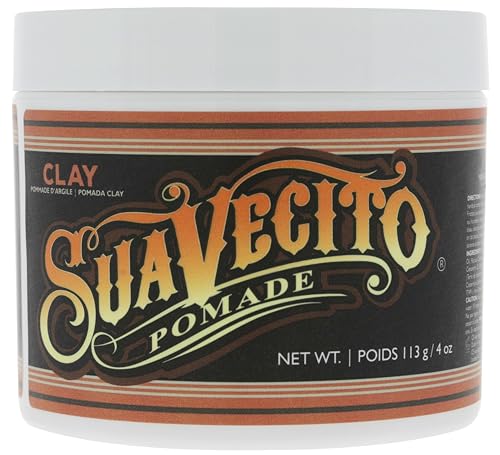
Practically: rough-dry with your fingers pushing the hair where you want it, use a matte clay rather than a pomade, and use less than you think. Shine on thick dark hair reads as greasy faster than it does on lighter hair.
Choosing by face shape
Dense hair gives you more control over silhouette than fine hair does, so face shape is worth taking seriously here.
Round. Height on top, tight at the sides. A high taper with a textured top adds the vertical line a round face wants. Avoid leaving width at the temples, which dense hair will produce by default.
Square. Nearly anything. A textured crop or a short taper both play to a strong jaw without softening it.
Long. Keep the height down and allow some width. A side-swept style or a crop with a forward fringe shortens the face. This is the one case where you do not want a very high fade.
Heart-shaped. A fringe worn forward covers a wider forehead, and some weight at the jaw from a beard balances the proportions.
A wash and care routine for thick Mediterranean hair
Dense hair needs less washing and more conditioning than most routines assume.
Wash two or three times a week rather than daily. Thick hair is not oily hair, and daily washing strips it and prompts the scalp to compensate, which is the origin of most greasy-root complaints.
Condition every wash. Coarse strands lose moisture faster along the bends of a wave, and dry wavy hair frizzes rather than waving.
Rough-dry rather than air-dry. Ninety seconds with a dryer on medium, fingers pushing the hair where you want it, changes the result more than any product does. Air-dried dense hair sets in whatever direction the crown dictates.
Use matte products. Shine on thick dark hair reads as greasy at a distance in a way it does not on lighter hair.
Sun, sea and chlorine
A genuine Mediterranean issue and one that generic guides skip.
Salt water is a texturiser, which is why beach hair looks good, and a dehydrator, which is why it looks good for one day and rough for the next three. Rinse with fresh water after swimming, and condition afterwards rather than before.
Chlorine is harsher and binds to the hair. A rinse before you get in, so the hair is already saturated with clean water, reduces how much it absorbs.
Strong sun lifts colour and dries the hair shaft. Dark hair hides the colour change better than it hides the texture change. A leave-in conditioner is more useful than any dedicated sun product.

Thinning, which arrives early for a lot of men here
Early recession is common across the Mediterranean and it is the most frequent reason a style that used to work stops working.
The instinct is to grow the top longer and comb it forward. On thick hair that almost never lies flat enough to be invisible, and the contrast between a dense section and a sparse one is what the eye catches. Shorter on top reduces the contrast, and a lower fade keeps more density around the perimeter than a high one.
Our thinning hair guide covers the treatment options honestly, including which ones have evidence behind them.
Facial hair
Most Greek men can grow a substantial beard, and the combination of dense dark facial hair with a short cut is one of the most reliable looks available.
The corollary is a heavy shadow. If you shave clean, you may have visible stubble by evening regardless of how close you shaved that morning, which is a feature of density and colour rather than a shaving failure. Chasing it with a closer shave produces irritation rather than a longer-lasting result.
A short, well-edged beard is usually the better answer than daily clean shaving. Our Italian beard styles guide covers the shaped, edge-led approach that suits Mediterranean facial hair particularly well, since the principles are the same across the region.
Talking to your barber
Say the word wavy. A barber who thinks he is cutting straight hair will cut it wet to length and leave you with something shorter and flatter than you wanted.
Ask for weight removed underneath rather than layers on top. On dense wavy hair, layering the top adds volume where you already have it.
Give guard numbers for the sides. “Short” is not a measurement and the contrast is visible on dark hair.
Mention how fast it grows. If you are back in three weeks, a barber can cut slightly differently than for someone on a six-week cycle.
Common mistakes
Treating wavy hair as straight hair that is behaving badly. It is the root of most of the complaints in this article, and it leads directly to the next three.
Using too much product. Thick hair needs less than fine hair, not more, because each strand carries more of it. Most men with dense Mediterranean hair are using roughly double what the hair wants.
Air-drying and hoping. Dense hair dries into whatever direction the crown dictates, and ninety seconds of directed drying is the difference between a cut with shape and a cut without.
Washing daily. It strips the hair and drives the scalp to overproduce, which produces the greasy roots that prompted the daily washing.
Going to a barber who does not cut wavy hair regularly. On dark dense hair every line is visible, which cuts both ways: a good cut looks excellent and a mediocre one looks obvious.
Brushing it dry. On the wavier end of the range this separates the wave into frizz, and no product applied afterwards will put it back.
Finding the right barber
More decisive here than in most places, because the contrast of dark dense hair shows technique.
Watch a fade being finished before you sit down. It is the technical test, and a shop that blends cleanly on hair like yours will handle everything else.
Ask whether they cut it dry. A barber who checks length dry on wavy hair understands the shrinkage problem; one who cuts wet to length and sends you off does not.
Bring a photograph of someone with your texture, not just your preferred shape. A photo of straight hair styled the way you want tells a barber almost nothing useful about what to do with waves.
Frequently Asked Questions
Should my barber cut my hair wet or dry?
If your hair is genuinely wavy or curly, ask for the length to be checked dry before the finish. Wavy hair sits longer wet and springs up as it dries, so cutting to length while wet produces something shorter than you asked for. Straight hair is less affected.
What products suit thick Greek hair?
Matte clay or a light paste for texture and hold, and a leave-in conditioner if the hair is dry from sun or salt. Avoid high-shine pomades: on dark dense hair, shine reads as grease from across a room. Use less than the packaging suggests; thick hair needs less product than fine hair, not more, because each strand is doing more work.
How do I stop my hair frizzing in humidity?
Condition properly and stop brushing it dry. Frizz on wavy hair is almost always moisture loss plus handling rather than anything a product can fix afterwards. Comb it wet with conditioner in, then leave it alone while it dries.
What are traditional Greek hairstyles?
In the ancient sense, long and loosely curled, often bound or wreathed, which is the image most search results return and which essentially nobody wears today. In the modern sense there is no single traditional style; Greek men wear the same range as the rest of southern Europe, with the textured crop and the mid fade dominating.
Is Greek hair curly or straight?
Most commonly wavy, in the 2A to 2C range, with plenty of variation either side. A great many Greek men have wavy hair they treat as misbehaving straight hair, which is why it never sits the way they want.
Why does my hair go flat by the afternoon?
Usually too much product, product applied to hair that was still damp, or a cut that left too much weight. Wavy hair holds shape from the cut, not from the product.
How often should I get a haircut?
Every three to four weeks if you wear a fade or taper, since fast-growing dense hair blurs the sides first. Longer styles can go six weeks or more.
What is the best cut for thick wavy Greek hair?
A textured crop or a mid fade with two to four inches on top. Both work with the wave rather than against it and both remove bulk from the sides, which is where density reads as width.
Where to go next
For beard shaping, our Italian beard styles guide covers the Mediterranean approach in detail. For curl-specific advice, see curly hair products for men, and for the technical treatment of thick coarse hair, our guide to cutting and styling dense hair.
